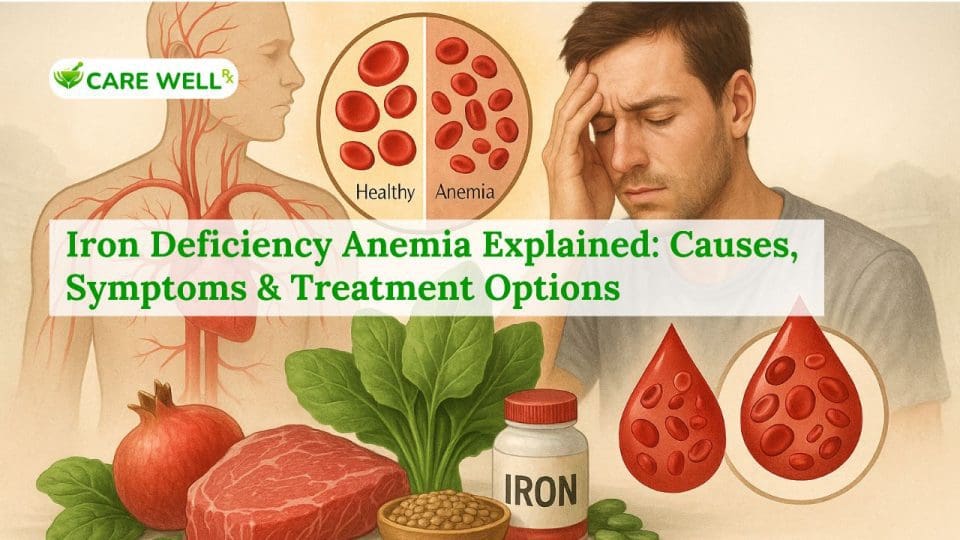
Over two billion individuals worldwide suffer from iron deficiency, making it the most prevalent nutritional deficiency. Anemia- Iron deficiency is the most severe type of condition, which causes the body’s tissues to get less oxygen. Children, women and those with long-term medical conditions are particularly vulnerable, but anyone can be impacted. At Carewell Pharmacy, we think it’s important to assist you with the knowledge and easily accessible solutions you need to take control of your health. This blog post will discuss iron deficiency anemia’s definition, symptoms, causes, and available treatments, including supplements and home remedies.
What is Iron Deficiency Anemia?
Anemia, or iron deficiency, is the result of your body not producing enough hemoglobin, the protein in red blood cells that transports oxygen to your tissues. Your body cannot make enough healthy red blood cells if you don’t get enough iron, which can cause weakness, fatigue, and other major health problems. Severe or prolonged iron deficiency anemia can affect daily functioning, immunity, and mental function, whereas mild iron deficiency may not show any symptoms.
Causes of Iron Deficiency:
A number of causes, such as inadequate dietary iron intake, blood loss, and reduced iron absorption, can contribute to iron deficiency, a prevalent disorder. Other contributing factors include specific medical disorders or drugs, as well as increased iron requirements during growth spurts, menstruation, or pregnancy. Prevention and treatment of iron deficiency (low iron) depend on an understanding of its causes. These are the most typical causes iron deficiency are given below,
- Dietary Iron Deficiency: One of the main causes of anemia is insufficient intake of foods high in iron such as beans, red meat, poultry, and fortified grains. Vegans and vegetarians who avoid plant-based iron sources like spinach, lentils, or fortified cereals are more vulnerable.
- Blood Loss: Among adults, particularly women, this is the most common cause. Low iron levels might result from heavy menstruation, internal bleeding (colon polyps, ulcers), or frequent blood donation.
- Increased Iron requirements: The body needs more iron during pregnancy, lactation, and times of fast growth (like adolescence), which can result in a deficit if food or supplements are not taken.
- Medications and other medical conditions: Iron deficiency can be caused by autoimmune disorders, certain chronic illnesses (including cancer and inflammatory bowel disease), and some medications (such as non-steroidal anti-inflammatory drugs).
- Poor Iron Absorption: Iron absorption from diet may be affected by conditions such as Crohn’s disease, celiac disease, or bariatric surgery.
- Other factors: Iron deficiency is also more common in athletes in training, Aboriginal Australians and people with intestinal worms.
Iron Deficiency Anemia Symptoms:
Early detection of iron deficiency anemia symptoms is essential for successful treatment. The iron deficiency Anemia symptoms, which could appear gradually, include:
- Extreme tiredness or fatigue
- Headaches
- Pale skin
- Breathlessness
- Cold hands and feet
- Lightheadedness or dizziness
- Irregular and fast heartbeat
- Brittle nails
- Non-food items cravings like ice or clay.
A blood test to measure your ferritin and hemoglobin levels is crucial if you have any of these symptoms.
Here are some of the most frequently ignored signs of low iron in females.
- Poor concentration.
- Hair loss and thinning.
- Heavy periods.
- Irritation and a bad mood.
- Restless leg syndrome.
Low Hemoglobin Symptoms:
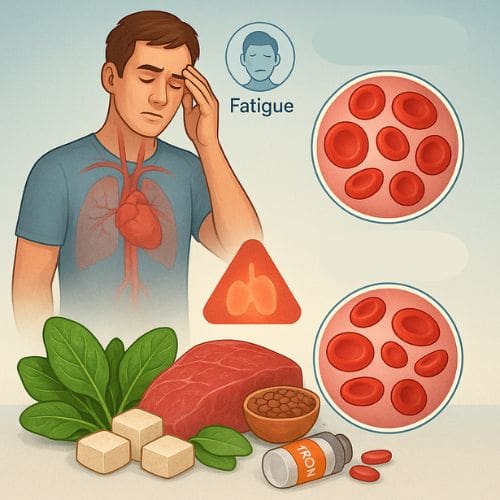
Hemoglobin is the substance in your blood that carries oxygen. Anemia, or low hemoglobin levels, can result in a variety of symptoms, such as lightheadedness, exhaustion, and shortness of breath. Cold hands and feet, headaches, and a fast heartbeat are additional possible symptoms. It’s essential to consult a doctor for treatment and diagnosis if you notice any of these symptoms. The following are the low hemoglobin symptoms that relate to how iron deficiency affects the body’s capacity to carry oxygen.
- Weakness and exhaustion.
- Reduced stamina.
- Yellowish or pale skin.
- Heart palpitations.
- Breathlessness or chest pain.
Iron Deficiency Anemia Treatment at Home:
Focus on improving iron intake through dietary and lifestyle modifications to manage iron deficiency anemia at home. If necessary, take supplements. Your body’s iron stores can be increased by eating a diet high in iron-rich foods such chicken, red meat, iron-fortified cereals and beans. Iron absorption can also be improved by combining foods high in vitamin C with foods high in iron. The following are useful iron deficiency anemia treatment at home options are ideal for anyone with moderate anemia or seeking natural help.
- Lifestyle Modifications:
- Limit dairy and caffeine consumption around meals.
- Antacids should not be near foods high in iron.
- As red blood cell synthesis is supported by vitamin B12 and folate, make sure you have sufficient amounts of both vitamins.
- Stay hydrated and manage stress.
- Improve Your Nutritional Diet: Include foods high in iron to help with anemia. To gradually raise the iron content, cook in cast iron pans.
- To increase iron intake, eat foods rich in iron by including – dark green leafy vegetables, poultry, fish, red meat, beans, legumes, eggs, seeds and nuts in your diet.
- Include iron-fortified foods like pastas, cereals and breads.
- Limit iron-absorption inhibitors like calcium-rich foods and black tea.
- Herbal Remedies: Traditionally, herbs including yellow dock, dandelion root, and nettle tea have been used to maintain iron levels. These need to supplement medical therapies rather than take their place.
- Natural Iron Supplements: Carewell Pharmacy provides chewable liquids that are better for the digestive tract for individuals looking for softer solutions.
How to Increase Iron Levels Quickly:
How can I increase iron levels quickly? – may be first concern if you’ve been diagnosed with iron deficiency. These are some useful strategies:
- Eat the best foods for iron deficiency: red meat (beef, lamb), Liver and organ meats, Poultry, Fish and shellfish.
Plant Sources – Lentils and beans, Tofu, Spinach and kale, Pumpkin seeds and quinoa, Fortified cereals and breads.
To improve absorption, iron-rich foods for anemia should be taken regularly and combined with foods high in vitamin C, such as bell peppers, oranges, or strawberries.
- Consider iron supplements for anemia:
Iron supplements, either prescribed or over the counter, are often the first step of treatment for anemia. Ferrous gluconate, ferrous sulfate, and more recent forms like iron bisglycinate—which might be less harsh on the stomach—are among them. To improve absorption, Carewell Pharmacy advises taking iron supplements with vitamin C (such as a glass of orange juice) or on an empty stomach. Avoid taking them with foods high in calcium or caffeine, as these substances inhibit the absorption of iron.
Facts About Iron Deficiency:
- Worldwide, iron insufficiency is the most prevalent nutritional condition.
- Due to menstruation and pregnancy, women between the ages of 15 and 49 are most at risk.
- Excessive supplementing can cause iron overload, which can harm organs.
- Iron levels should be checked at least once a year by regular blood donors. Iron absorption can be improved by up to 67% with vitamin C.
When to see a doctor:
Supplements and diet are beneficial, but additional testing may be necessary for moderate to severe iron deficiency. Your doctor might suggest the following if your hemoglobin level is extremely low:
- Transfusions of blood in emergency situations.
- Intravenous iron treatment
- Colonoscopy or endoscopy to detect internal hemorrhage (bleeding).
Overusing iron supplements and self-diagnosing might be dangerous. Always consider professional advice for Iron Deficiency
Manage Your Iron Health with Carewell Pharmacy:
Iron deficiency is a subtle but dangerous illness that can impact long-term health, energy, and mood. With the correct strategy, it is reversible and managed. Whether you require the best iron supplements for anemia, need guidance or dietary recommendations from experts – Carewell Pharmacy is here to help you on your path to wellness. Our goal is to keep your health on track, from recognizing the symptoms of low iron in women to assisting you in adding the best foods for iron deficiency. For more information on supplements, dietary advice and individualized treatment options to overcome iron deficiency naturally and successfully, visit or call Carewell Pharmacy today.